
Hyperbaric Oxygen Treatment of TBI, PTSD, and Spinal Cord Injury

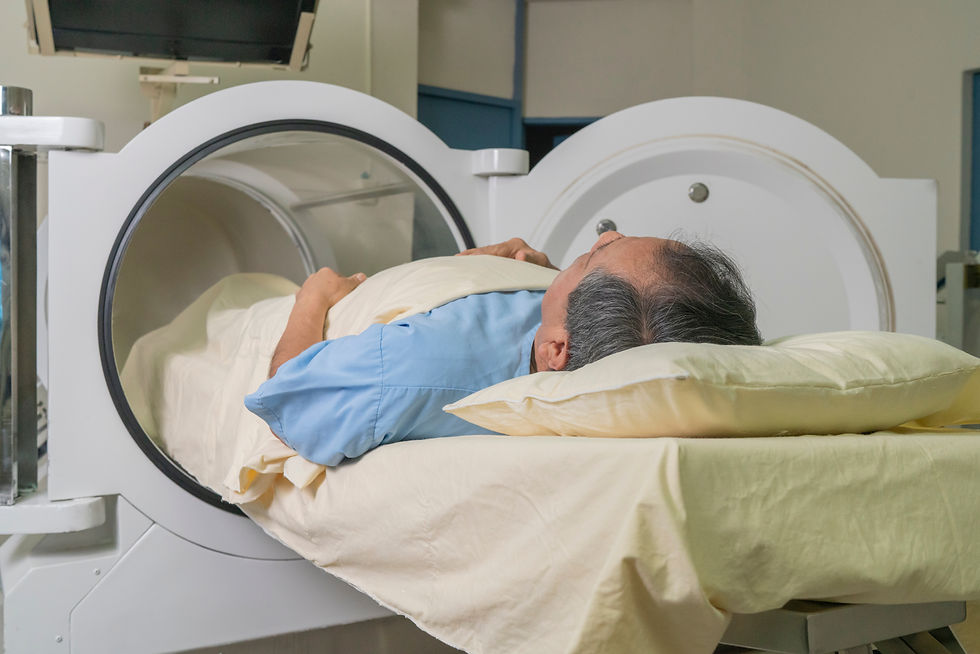
This comprehensive review and clinical presentation by Dr. James K. Wright and colleagues provides a clear, evidence-based overview of hyperbaric oxygen therapy (HBOT) as a treatment for traumatic brain injury (TBI), post-traumatic stress disorder (PTSD), and spinal cord injury (SCI). Spanning history, mechanisms of action, and clinical data, the document makes a strong case for HBOT’s role in brain and spinal cord repair—even years after injury.
Key Highlights:
History & Evolution — Traces HBOT from its 1877 use in decompression illness through 89 years of clinical application in brain and spinal cord injuries, including early successes in head trauma (Mogami 1969), carbon monoxide sequelae, and modern military mTBI/PTSD cases.
Mechanisms of Action — Explains HBOT’s four primary effects in neurologic injury:
Correcting tissue hypoxia
Promoting nerve healing and neuroplasticity (stem-cell activation, mitochondrial recovery, growth-factor upregulation)
Potent anti-inflammatory action (reducing cytokines, glial scarring)
Direct pain relief via nitric oxide, endogenous opioids, and inflammation control
These mechanisms address shared pathology in TBI, PTSD, and SCI—including diffuse axonal injury, chronic inflammation, and treatment-resistant depression.
NBIRR Study (2013) — Detailed results from the National Brain Injury Rescue and Rehabilitation multicenter trial (32 subjects with chronic mTBI/PCS ± PTSD). Using 40–80 sessions of 1.5 ATA HBOT:
Improvement in 21 of 25 neurocognitive measures
Significant gains in mood (depression, anxiety, fatigue), cognitive processing speed, and quality of life
Greater benefits with earlier treatment, younger age, active-duty status, and more sessions
Zero adverse events; protocol proven safe
Broader Evidence — References 13 randomized controlled trials (352+ subjects) showing consistent symptom relief in mTBI and PTSD, plus emerging data on SCI motor/sensory improvement and reduced narcotic dependence.
Conclusions from the Paper The authors state that sufficient Level B evidence and real-world outcomes in >31,000 patients (including >12,000 veterans) now support immediate, safe clinical use of HBOT for TBI, PTSD, and SCI. Benefits—reduced depression/suicidal ideation, PTSD symptoms, pain, and improved cognition—are often long-lasting and enhanced when combined with other therapies.
This document is an excellent resource for clinicians, researchers, veterans, and families seeking rigorous science on HBOT’s regenerative potential.
Download the full paper (with appendices, tables, graphs, and NBIRR protocol details) here:
Questions? Contact the SCI-DI team—we’re happy to help you navigate the evidence and discuss real-world application.
Healing the brain and spinal cord is possible; the data is here.


Comments